

 Login / Register
 RHS Award Winning Varieties
 Quality UK Grown Plants
 12 Month Guarantee
 100% SSL Secured Shopping
Growing rhubarb is one of the best decisions you can make in a kitchen garden, and not just because it’s easy. It’s a crop that comes back stronger every year without being replanted and often delivers its first harvest weeks before almost anything else is ready to pick. The reward for the effort you put in? Vibrant stalks with a depth of flavour that only comes from produce pulled fresh from your own garden.
It’s a vegetable that is often thought of as a fruit, thanks to its sweet flavour and long history of use in crumbles, jams, and desserts. It needs a hard frost to perform at its best, and asks very little of you in return for years of generous cropping. Once you’ve grown your own, it’s hard to go back.
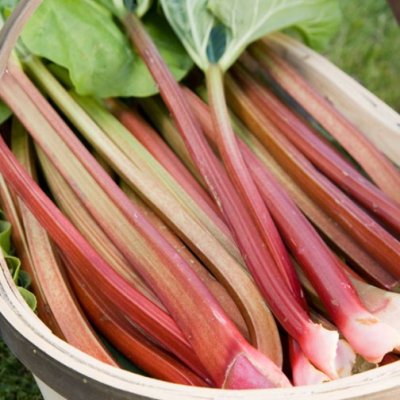
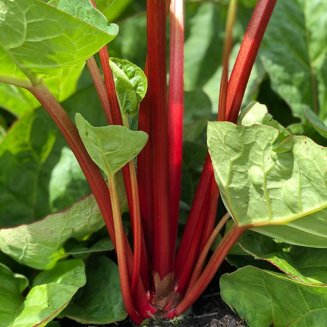
Is Rhubarb Easy to Grow in the UK?
It really is. Rhubarb growing in the UK suits our climate beautifully. The plant needs a cold winter to perform well, which makes it just about perfectly matched to a British garden. It tolerates sun and partial shade, and once it’s settled in it largely looks after itself. Give it a decent start and an annual feed in spring, and it’ll reward you generously for years.
One crown, well planted and cared for, will keep producing enough stalks for crumbles and jams season after season, without you having to do much beyond the basics.
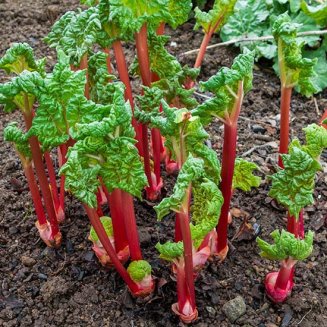
Choosing the Right Spot When Growing Rhubarb
Rhubarb isn’t complicated, but it does have a couple of genuine preferences worth respecting. It wants reasonable drainage above almost everything else. Crowns sitting in waterlogged soil over winter are the most common cause of problems, so if your soil holds water, that’s the one thing worth addressing before you plant.
Beyond that, full sun to partial shade suits it well, and a sheltered spot out of harsh winds will help the big leaves stay intact through the season. Each crown needs around 1.2m (4ft) of space. It feels generous when you’re planting a dormant-looking crown, but rhubarb grows into a substantial plant and it needs room to do it properly.

Preparing Your Soil
The effort you put in before planting pays you back for years with rhubarb, so it’s worth doing this properly. Dig the bed to around 45cm deep (two spades) and as you go, remove any perennial weeds completely, roots and all. Once rhubarb is established you won’t want to be disturbing its roots to chase out bindweed, so getting rid of it now saves a lot of frustration later.
Work in a generous amount of well-rotted farmyard manure or garden compost as you dig. Rhubarb is a hungry plant with deep roots and it genuinely thrives in rich, organic soil. You’ll see the difference in the thickness of the stalks. If your soil is heavy clay, mixing in some horticultural grit at the same time will improve drainage and air circulation around the crown.
Planting Your Rhubarb
Rhubarb is almost always planted as a crown rather than from seed, and for good reason. Crowns establish quickly, crop reliably, and give you a plant that’s true to variety. Seed-grown rhubarb is variable and slow, so crowns really are the way to go.
Bare-root rhubarb crowns can be planted when they are fully dormant, from November until late March. If your soil is inclined to be heavy or wet, it’s worth establishing the crown in a container first before transferring it to open ground in spring. Plant each crown into a 20cm (8in) pot of multi-purpose compost, keep it in a cold greenhouse, garage, or garden shed, and make sure the compost stays slightly damp. It can then go out into the ground in April when conditions are more suitable.
How to plant:
- Soak the crown in water for an hour or two before planting. This rehydrates it after transit and sets it up well
- Dig a hole wide and deep enough to sit the crown without cramping the roots
- Apply rootgrow™ mycorrhizal fungi directly to the crown before lowering it in. It encourages rapid root development and makes a real difference to how quickly the plant establishes
- Position the crown so the top bud sits just at or barely below soil level. Planting too deep is one of the most common mistakes and can cause the crown to rot
- Backfill, firm the soil gently, and water in thoroughly
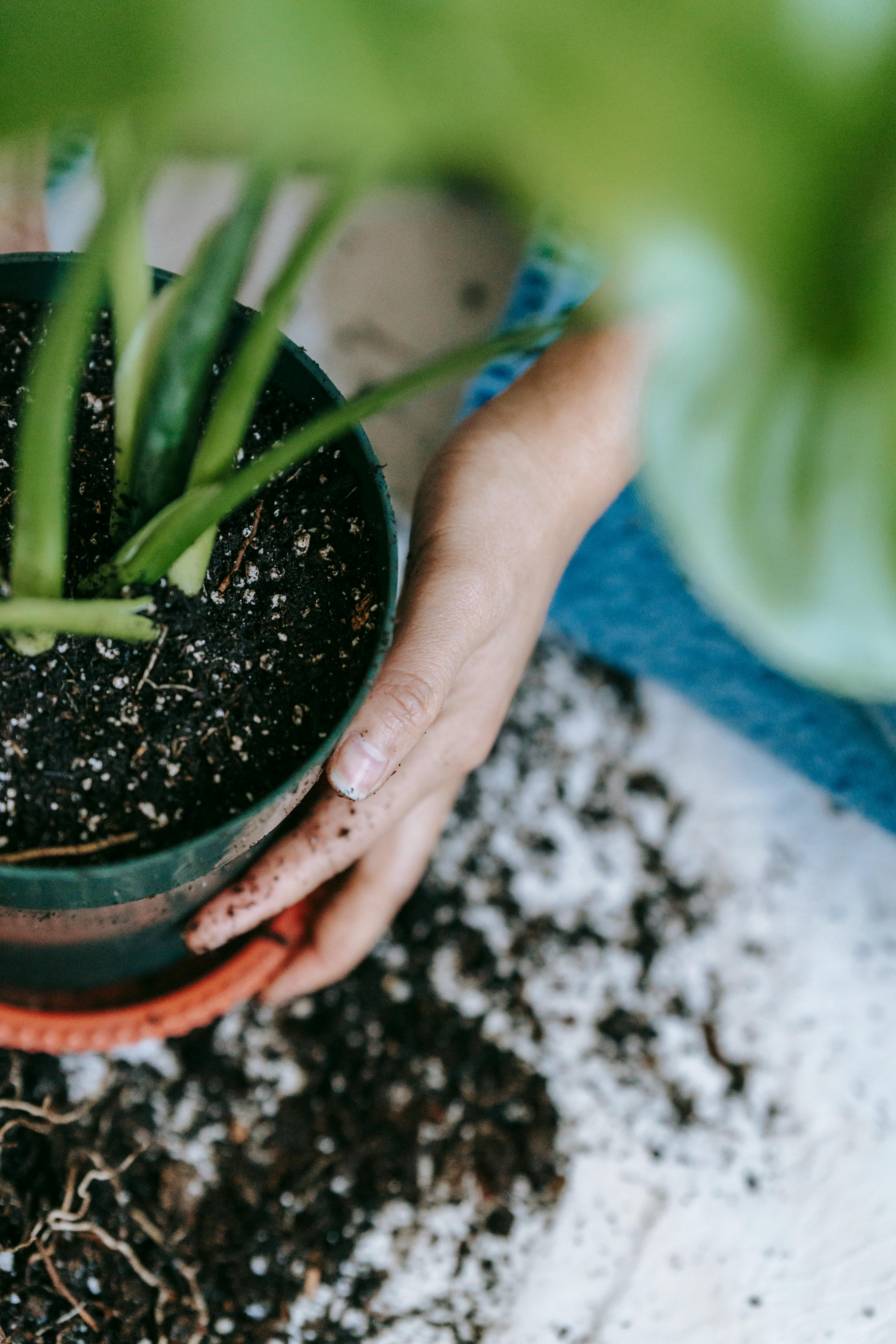
Planting Pot Grown Rhubarb
Pot grown rhubarb can be planted out at any time of year, so long as the ground isn’t frozen or waterlogged, which makes it a flexible option if you miss the bare-root season. Compared to bare-root crowns, pot grown plants arrive with an established root system already in place, which helps them settle in quickly and get off to a confident start in their first season.
The method is much the same as planting bare root crowns; the main difference is that you won’t need to soak it beforehand. Just ease it out of the pot gently and water it in well after planting.
How to Water Rhubarb
In the first growing season, keep the soil around the crown consistently moist. This is when good watering habits really matter, while the roots are getting established. After that, rhubarb is far more self-sufficient than most people expect. You’ll only really need to water during a prolonged dry spell, and even then a thorough drench once a week is plenty. Rhubarb’s roots go deep, so a good long soak that reaches them is far more useful than a quick sprinkle of water every day.
Container-grown rhubarb is the exception. Pots dry out much faster than open ground, so check them regularly and never let the compost dry out completely.
Feeding Rhubarb Correctly
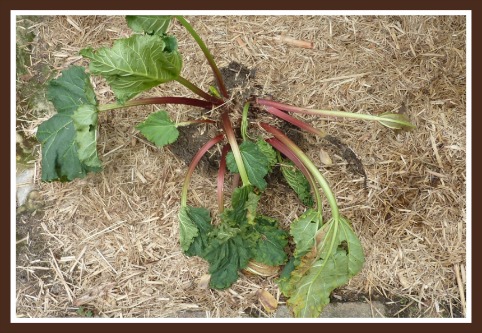
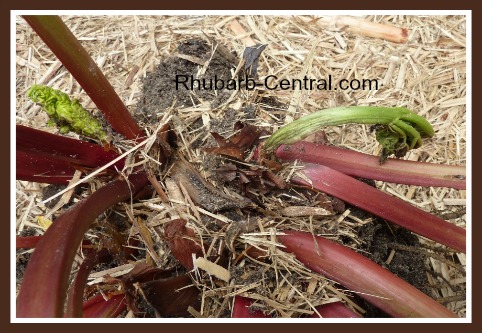
Rhubarb responds really well to feeding, and the timing matters. A generous application of a high-nitrogen fertiliser in early spring, just as the first buds start to show, sets the plant up for the whole season. Nitrogen drives the strong stem growth that gives you fat, well-coloured stalks.
The other thing worth doing every spring is mulching around the crown with well-rotted compost or farmyard manure. It feeds the soil gradually and locks in moisture, all in one go. Keep the mulch away from the central bud itself and let it do its work over the growing season. You don’t need to feed again in summer or autumn. Just let the plant wind down naturally.
Weeding and Mulching
The first year is when weeding matters most. A young crown putting all its energy into establishing its root system really doesn’t want competition, so keeping the area clear during that first growing season makes a genuine difference to how the plant develops.
Once rhubarb is fully established, its big spreading leaves do a lot of the work for you by shading out potential weed growth. The annual spring mulch helps too. It makes any weeds that do appear much easier to pull, and over time it improves the soil to the point where weeds find it harder to get a foothold in the first place.
When to Pick Rhubarb in the UK
Getting the timing right is one of the most important things about growing rhubarb well, both knowing when the season starts and knowing when to stop.
In the first year, don’t pick anything at all. It’s tempting when you see those stalks coming up, but letting the plant focus entirely on root development in year one means a far more productive plant from year two onwards. In the second year, pull a few of the strongest stalks and leave the rest. From the third year you can harvest freely, and by then you’ll have a plant that produces more than enough.
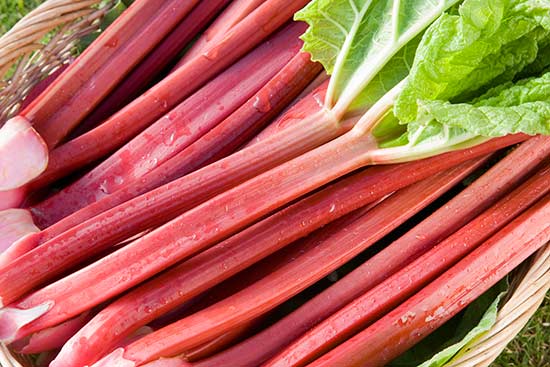
The main outdoor rhubarb season in the UK runs from around April through to early July. Stalks are at their best in late spring, firm, well-coloured, and full of flavour. Stop harvesting by midsummer and leave the plant to recover and build up energy for next year. This is genuinely what keeps the crown healthy and productive season after season.
How to Harvest Rhubarb
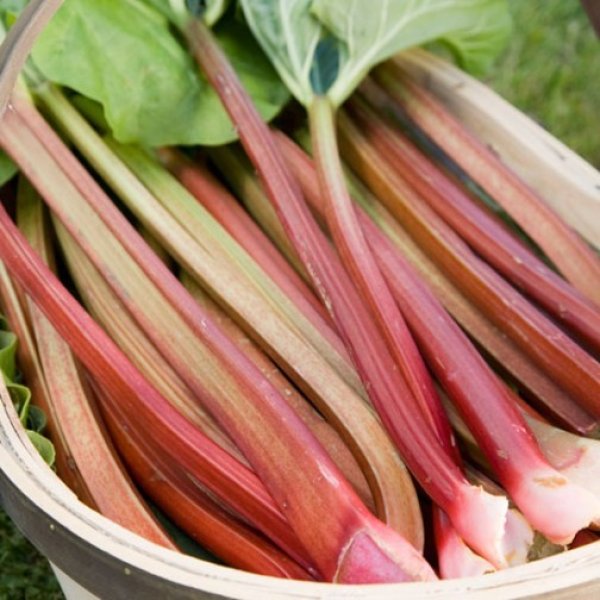
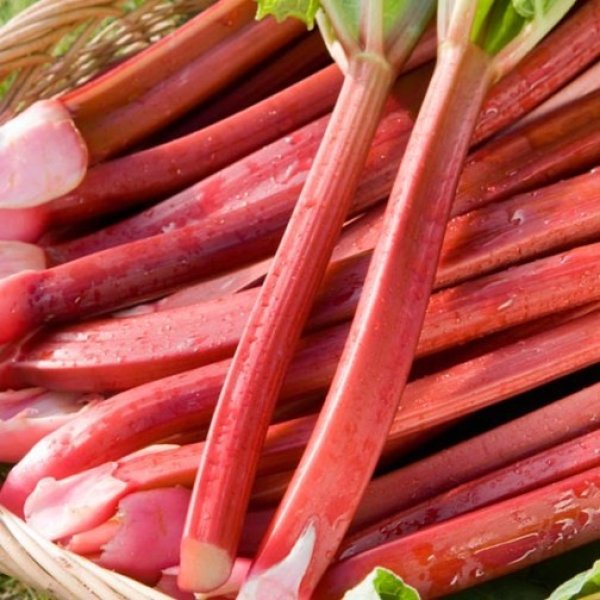
Grip the stalk near its base, pull downward and outward, and twist gently to one side. It should come away cleanly. Always leave at least three or four stalks on the plant as stripping it completely weakens it considerably. Don’t forget to remove and compost the leaves; they contain oxalic acid and aren’t safe to eat.
Forcing Rhubarb for an Early Harvest
By covering the crown in midwinter and blocking out all light, you encourage the plant to push up pale, elongated stalks in a hurry. What you get is sweeter, more tender rhubarb arriving weeks ahead of the outdoor season, often in February or March when the rest of the garden has barely stirred.
Cover the crown in December with a thick layer of straw for insulation, then place an upturned bucket or a purpose-made terracotta rhubarb forcer over the top to exclude all light. Check on it every week or two once you’re into January, and harvest the stalks when they reach around 30cm long. They’ll be pale pink to cream in colour, noticeably softer than outdoor stalks, and sweeter too.
The one thing to bear in mind is that forcing puts extra demand on the crown, so don’t do it every year. If you have two plants, alternate which one you force so each gets a full recovery year in between. A plant that’s been forced will need the rest of that growing season to rebuild its strength, so harvest lightly from it in the year that follows.
Rhubarb Varieties Worth Growing
Choosing the right variety makes more difference than people often realise, both to when you harvest and to how your rhubarb tastes.
| Variety | Characteristics | Season |
|---|---|---|
| Timperley Early | Very early, slender stalks, mild flavour, best for forcing and first harvests of the year | Early |
| Victoria | Heritage variety, easy to grow, long very thick red stalks, excellent flavour | Late |
| Champagne | Heritage variety, one of the best for forcing, easy to grow, long stems, notably sweet | Early |
| Raspberry Red | Thick stalks with deep red colour without the need for forcing, lovely flavour | Mid |
| Stockbridge Arrow | Crops heavily over a long period, long dark red stalks, delicate sweet flavour | Late |
| Livingstone | Unique variety cropping twice a year, thick, well-coloured stalks with a bold tangy flavour, good disease resistance | Spring & Autumn |
| Canada Red | Short, slender stalks that are deep crimson throughout, sweeter than most, very easy to grow | Mid |
| Fulton’s Strawberry Surprise | Voted best flavoured rhubarb in RHS trials at Wisley, strong and vigorous, ideal for pots | Mid |
Timperley Early is particularly well-suited to forcing and will give you the earliest possible harvests. Victoria is the one to go for if you want sheer productivity. If you’re growing rhubarb as much for how it looks as how it tastes, Fulton’s Strawberry Surprise and Champagne both have that vivid colour and sweetness that makes them particularly special on the plate.
Growing Rhubarb in Containers
No space in the garden? No problem. Rhubarb grows very well in a large container and looks striking doing it. You’ll need a pot at least 40-50cm (16-18in) in both diameter and depth. Rhubarb has a substantial root system and a cramped pot will restrict both growth and cropping, so bigger is genuinely better here.
Use a rich, loam-based compost and mix in some slow-release fertiliser before planting. Feed monthly through the growing season with a liquid fertiliser and top-dress with fresh compost each spring. The main thing to stay on top of is watering. Containers dry out far faster than open ground, so check regularly in warm weather. In winter, move the pot somewhere sheltered, and if you want to try forcing, moving it into a dark shed or garage for a few weeks in January does the job well.
Pests and Diseases
Here’s the really good news: rhubarb is about as trouble-free as any plant in the kitchen garden. Most gardeners grow it for years without encountering a single significant problem.
The main thing to be aware of is crown rot, which usually comes down to poor drainage rather than bad luck. Waterlogged soil in winter is the culprit in most cases, so get your drainage right at planting time and you’re unlikely to see it. Slugs can occasionally go for young leaves early in the season, but mature plants shrug them off without any real damage. Viruses can occasionally cause mottled or distorted leaves; if you see this, remove and dispose of the affected plant rather than composting it.
That’s really about it. Rhubarb has very few enemies, and if you’ve prepared your soil well and planted somewhere with decent drainage, the chances are you’ll never need to think about pests or diseases at all.
Growing rhubarb is one of those kitchen garden projects that gives back far more than it asks. Get the planting right, feed it in spring, give it room to breathe, and then let it do its thing. There’s something quietly brilliant about a plant that just keeps showing up every year, earlier than almost anything else, reminding you that the season is starting again. Pull that first fat stalk, and the crumble practically makes itself.
If you’re unsure, get in touch with our team. We’re more than happy to advise you on growing rhubarb.
great and easy to follow instructions a good read. LPASSO
Hi gerry, I’d like to ask you, will this newly bred Livingstone rhubarb cultivar produce viable seeds, to grow true to parent? And what about the Timperly Early? thank you for your answer
Rhubarb seed will not come true to type. Some are better than others (like Victoria) but even that isn’t perfect.